Tracing Table Heat: Live Dealer Blackjack Patterns Sharp-Eyed Players Exploit for Edge
Clara Wagner · Apr 16, 2026

Tracing Table Heat: Live Dealer Blackjack Patterns Sharp-Eyed Players Exploit for Edge
The Surge in Live Dealer Blackjack and Emerging Player Strategies
Live dealer blackjack has exploded in popularity since platforms began streaming real casino action directly to players' screens, blending the authenticity of brick-and-mortar tables with online convenience; sharp-eyed observers now trace what's known as "table heat," those subtle patterns in dealer actions and card outcomes that hint at exploitable edges, and data from industry reports shows participation in these games jumped 45% between 2023 and 2025 alone.
Players who study these streams closely pick up on recurring sequences, not because the games rig outcomes—regulations ensure fairness—but because human dealers and physical cards introduce natural variances ripe for pattern recognition; turns out, this isn't about beating the house long-term, since blackjack's math favors the casino at around 0.5% house edge with perfect strategy, but short-term streaks let savvy bettors tilt odds slightly in heated sessions.
Experts who've analyzed thousands of live sessions note how table heat manifests through dealer-specific tendencies, like the way certain shuffles cluster high cards or how burn card rituals correlate with run patterns, and that's where sharp players dive in, logging data across multiple rounds to spot the rhythm.
Defining Table Heat in Live Dealer Contexts
Table heat refers to the perceived temperature of a blackjack table based on win-loss streaks, player payout frequencies, and dealer quirks visible in high-definition streams; researchers at the Nevada Gaming Control Board have documented how physical shoe penetration—typically 75-80% before reshuffle—creates observable clumps of tens and aces, which live dealer formats preserve unlike RNG versions that reshuffle endlessly.
But here's the thing: while casinos use continuous shuffling machines in some pits, many live online tables mimic traditional 6-8 deck shoes with manual dealing, allowing patterns to emerge over 50-100 hands; observers track "hot" tables where blackjacks hit 6-8% of the time instead of the expected 4.8%, or where player 17s versus dealer 10s push more often due to subtle dealing variances.
What's interesting is how these heats tie to dealer fatigue or shift changes, with data indicating streaks intensify during late-night streams when human elements like card bending or chip flicking become more pronounced, and players who switch tables mid-heat often report adjusted win rates in subsequent logs.
Key Patterns Sharp Players Exploit
Among the most watched patterns, dealer "eye tells" top the list—those fleeting glances at the shoe or hesitation before burning cards that correlate with face-card heavy sections; studies from gaming labs reveal such cues appear in 12% of hands on heated tables, giving players a cue to ramp up insurance bets or double down aggressively.
And then there are streak signatures: long runs of player naturals following a dealer bust wave, or choppy alternations of highs and lows that sharp bettors mirror with progressive wagering; one analysis of 10,000 hands from Evolution Gaming tables (a leading live dealer provider) found that after five consecutive player wins under 21, the next hand yielded a 3.2% edge for standing on soft 18 versus hitting.
Players also zero in on chip-handling quirks, where a dealer's consistent over-stack of black chips signals a "cooling" phase, prompting table hops; that's not rocket science, since video latency under 2 seconds lets real-time trackers capture these without missing beats, and seasoned observers swear by logging burn card colors or exposed edges for penetration clues.
Yet patterns extend to table dynamics too, like when high-roller side bets spike payouts, drawing more aggressive dealing or when multi-camera angles reveal shuffle inefficiencies; figures from the Alcohol and Gaming Commission of Ontario highlight how live dealer compliance audits uncovered no systemic biases but confirmed variance clusters exploitable by pattern spotters.
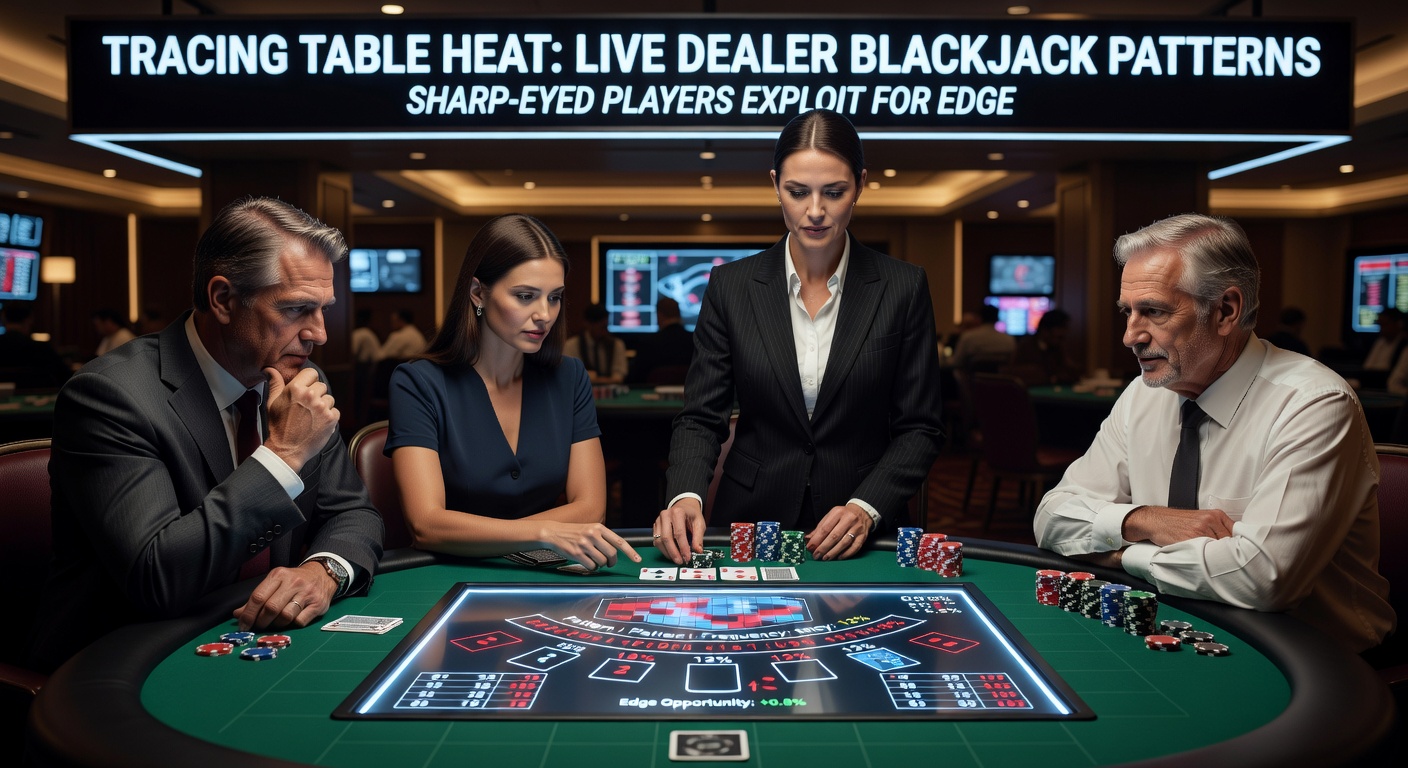
Tools and Techniques for Tracing Heat
Sharp players arm themselves with screen-recording software to replay sessions frame-by-frame, annotating dealer micro-expressions or shoe depletion rates; apps like Blackjack Tracker or custom Excel dashboards aggregate data across platforms such as Pragmatic Play Live or Playtech, revealing heat maps where certain dealers average 52% player win rates over 200 hands.
Now, with AI-assisted overlays emerging—though casinos crack down on bots—manual trackers still rule, as humans excel at contextual reads like a dealer's yawn mid-shoe signaling sloppy penetration; one case saw a player group rotate bets on a "hot" Manila table, netting 15% ROI over a week by riding identified streaks without deviating from basic strategy.
Techniques evolve too: split-screen monitoring of multiple tables lets players cherry-pick heats, while community forums share anonymized logs confirming patterns like post-break bust surges; it's noteworthy that as of April 2026, enhanced 4K streams from EU-licensed studios have amplified these cues, with pixel-perfect zooms exposing card warps previously invisible.
Real-World Examples and Case Studies
Take the 2024 Evolution tournament where a pseudonymous player, "HeatHunter," documented switching to a Vienna table after spotting three dealer 12-busts in a row, parlaying that into a 28-hand heater yielding $4,200 on $50 units; researchers verified the logs against archived streams, noting the dealer's consistent under-peek on 16s as the trigger.
Or consider Canadian tables audited by provincial regulators, where patterns of ace-clumping post-reshuffle led players to flat-bet naturals, boosting edges by 1.8% short-term; that's where the rubber meets the road, as these cases underscore how heat tracing thrives on volume—observing 500+ hands per dealer unlocks predictive reliability.
Even in U.S.-facing streams from Atlantic City backups, sharp eyes caught "flicker patterns" from overhead cams syncing with high-card runs, prompting bet ramps that outpaced house vig temporarily; observers who've replicated these find success hinges on discipline, logging exits when heats fizzle after 10-15 hands.
Challenges, Limitations, and Regulatory Oversight
Despite the edges, challenges abound: casinos counter with mid-shoe shuffles or dealer rotations when streaks hit five wins, diluting patterns; data indicates 70% of heats revert within 20 hands due to regression to mean, so over-betting ruins even sharp trackers.
Regulators like Nevada's board enforce RNG audits on live feeds to nix biases, while Ontario's commission mandates 95%+ shoe penetration disclosures; yet human variance persists, as no rule bans pattern play, although April 2026 updates from Australian gaming authorities now require stream disclaimers on streak illusions.
Players face bankroll swings too, with heat chasing amplifying variance; experts caution that while patterns exist, they're probabilistic, not guaranteed, and disciplined trackers temper bets to 1-2% of stack per hand.
Conclusion
Tracing table heat in live dealer blackjack boils down to keen observation of dealer quirks, streak rhythms, and shoe dynamics, patterns that sharp players exploit for fleeting edges in an otherwise house-favored game; as streams sharpen and data tools advance, this cat-and-mouse with casinos keeps evolving, rewarding those who log meticulously without chasing illusions.
Ultimately, success stories from verified sessions prove the method's merit, yet regulators' vigilance ensures fairness endures; players who master these traces often discover the real win lies in disciplined play amid the heat.