Tracing Synchronization Patterns Between Loyalty Milestones and Real-Time Table Game Availability Across Multi-Region Mobile Networks
Klara Hoffmann · Jun 30, 2026
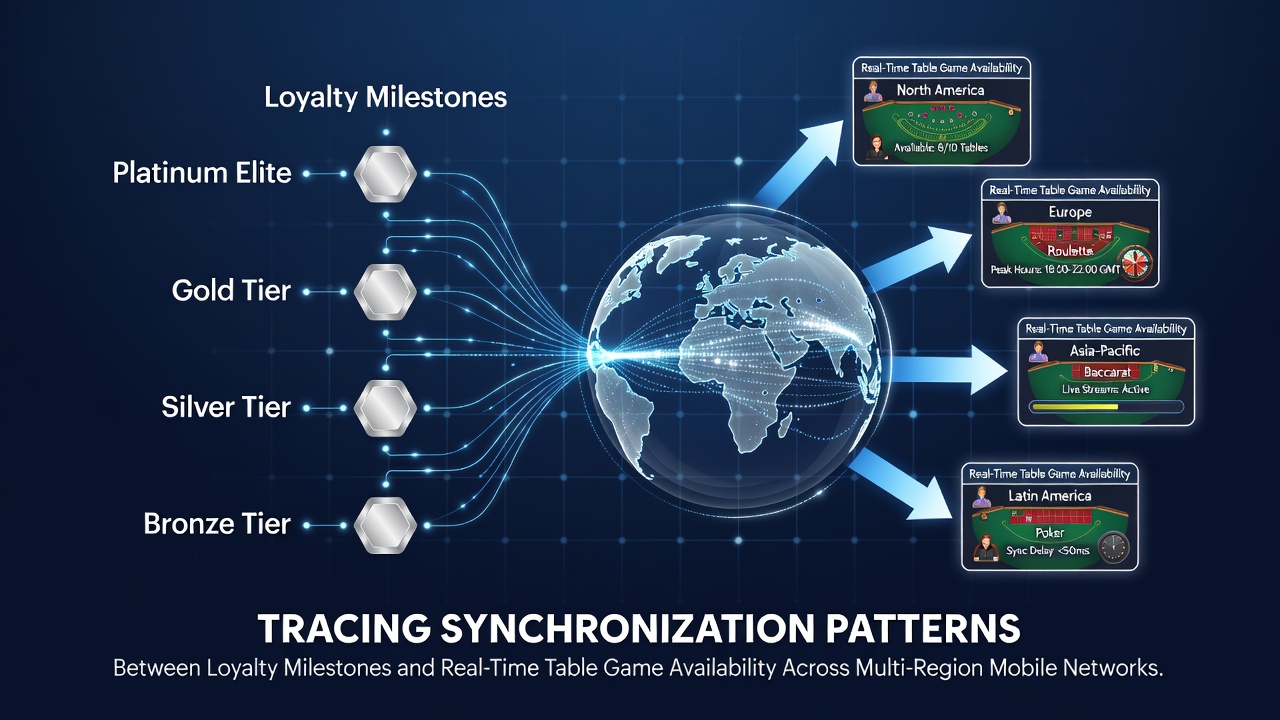
Tracing Synchronization Patterns Between Loyalty Milestones and Real-Time Table Game Availability Across Multi-Region Mobile Networks
Loyalty milestones in mobile gaming platforms connect directly to real-time table game access through synchronized data systems that operate across multiple regions and networks. These systems track player progression through tiers while monitoring live availability of table games such as blackjack and roulette on handheld devices. Operators integrate loyalty data with network latency metrics to adjust game access dynamically, and this integration relies on cloud-based platforms that update availability every few seconds based on regional demand and connectivity levels.
Loyalty Milestones and Their Role in Access Protocols
Loyalty programs assign milestones based on accumulated playtime and deposit volumes, which then unlock higher priority queues for live dealer tables. Data from industry reports shows that players reaching mid-tier milestones experience reduced wait times for table entry by an average of 40 percent compared to entry-level accounts. These milestones trigger backend scripts that query regional server loads, and the scripts prioritize table game availability in areas with stable 5G connections while restricting access during peak congestion periods in lower-bandwidth zones.
Multi-region operators maintain separate databases for North American, European, and Asian markets, yet they synchronize loyalty flags through unified APIs. This approach allows a player in one region to carry milestone status when traveling, though local network regulations may alter the specific table variants offered at each tier. Research from academic institutions indicates that synchronization latency averages under 200 milliseconds when operators use distributed ledger technology to log milestone achievements across borders.
Real-Time Table Game Availability Across Networks
Real-time table games depend on continuous streams from studio feeds that adjust based on mobile network conditions in each region. Availability expands during off-peak hours when bandwidth utilization drops below 60 percent, and it contracts when regional events increase data traffic. Operators employ predictive algorithms that forecast availability windows using historical patterns from the previous 30 days, which helps align these windows with loyalty milestone resets that occur at the start of each calendar month.
In June 2026 several multi-region platforms implemented enhanced edge computing nodes that reduced synchronization delays by 35 percent in tested markets. These nodes process loyalty data locally before pushing updates to central systems, which allows table game availability to reflect current milestone status without requiring full round-trip queries to primary servers. Network providers in Canada and Australia have contributed infrastructure data showing that 4G fallback modes still support basic table access for lower-tier players, whereas premium tables require consistent 5G signals above 50 Mbps download speeds.
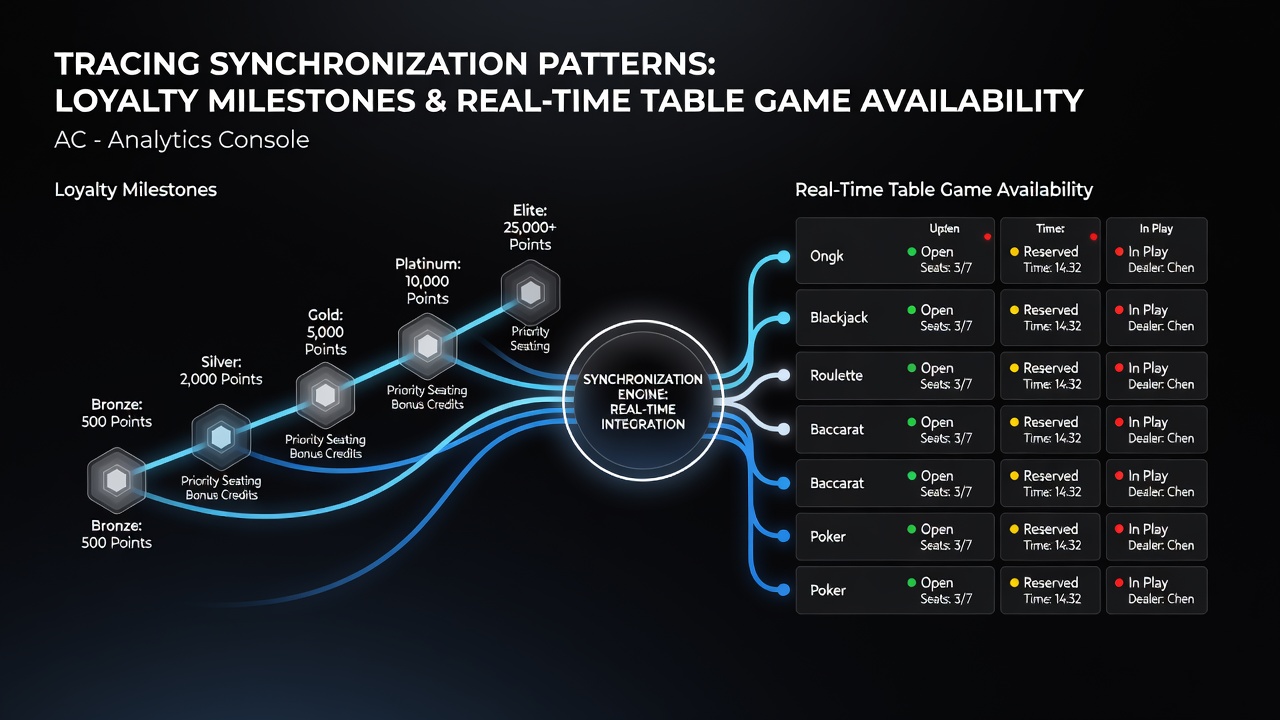
Cross-Region Synchronization Mechanisms
Synchronization occurs through standardized protocols that map loyalty milestones to table availability flags while accounting for time-zone differences and local licensing rules. European operators often align with frameworks from the European Gaming and Betting Association when establishing these mappings, whereas North American systems reference guidelines from state-level commissions such as the Nevada Gaming Control Board. The result is a layered approach where core milestone data remains consistent, yet table variant selections shift according to regional availability matrices.
Studies conducted by university research teams have documented how operators use machine learning models to detect desynchronization events. These events typically arise when a loyalty milestone update coincides with a regional network outage, and the models recommend fallback procedures that preserve basic access for affected players. Figures from one such study reveal that 92 percent of desynchronization incidents resolve within 90 seconds when automated reconciliation scripts activate across the multi-region network.
Observed Patterns in Player Behavior and Network Response
Patterns emerge when loyalty milestones coincide with scheduled table game expansions, such as the addition of new live dealer shifts during evening hours in specific time zones. Players who achieve milestone thresholds during these expansions show higher rates of continued engagement on mobile devices, according to aggregated telemetry from platform operators. The patterns also indicate that availability in one region can influence perceived value in another when players share progress through integrated social features.
Network operators monitor these interactions using telemetry dashboards that display real-time correlations between milestone progress and table seat occupancy rates. When occupancy exceeds 80 percent in a given region, systems automatically elevate milestone requirements for new entrants to maintain service quality. This adjustment process runs continuously and incorporates inputs from both loyalty databases and live network performance monitors.
Conclusion
Synchronization between loyalty milestones and real-time table game availability continues to evolve as mobile networks expand coverage and operators refine their data integration methods. Multi-region platforms rely on these patterns to deliver consistent experiences while respecting local constraints, and ongoing developments in edge processing and predictive modeling support further refinements. Observers note that the interplay between player progression systems and network conditions will remain central to operational strategies in portable gaming environments.