Shifts in User Behavior Following Implementation of Tiered Loyalty Structures in Browser Accessible Gaming Sites
Eden Hayes · Jun 20, 2026
Shifts in User Behavior Following Implementation of Tiered Loyalty Structures in Browser Accessible Gaming Sites
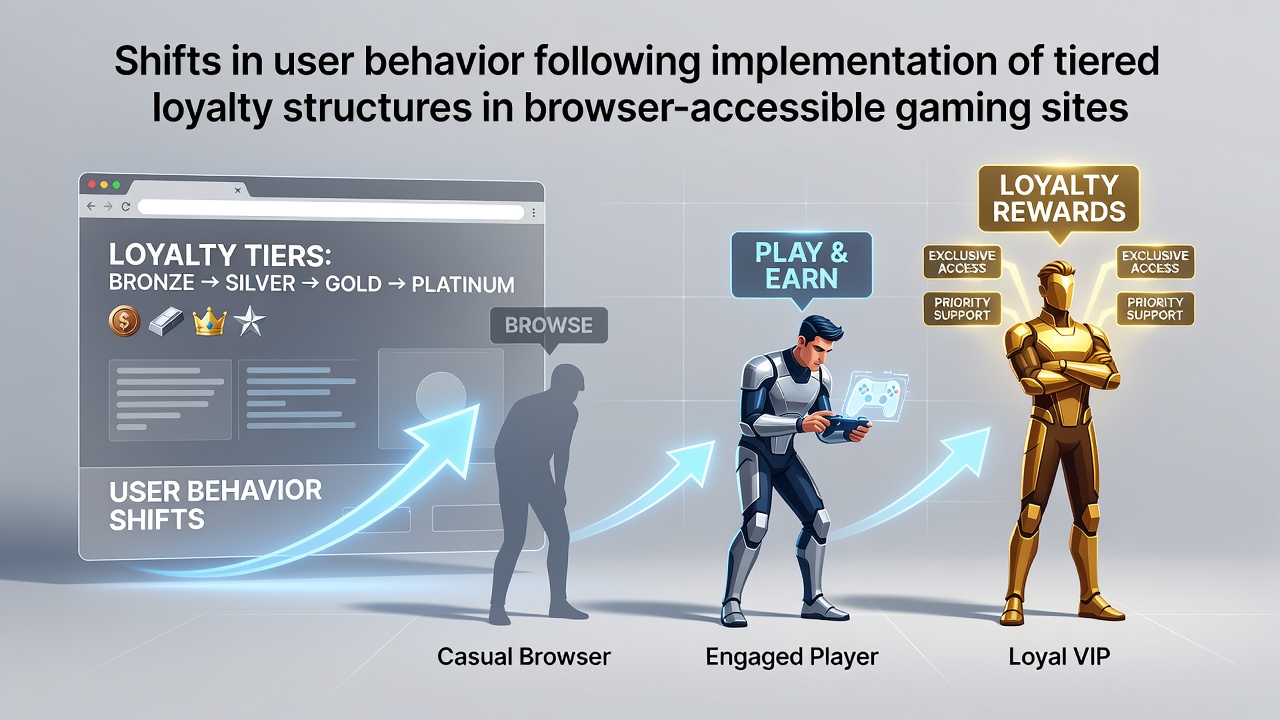
Tiered loyalty structures have become a standard feature across many browser accessible gaming sites since their widespread adoption in the mid-2010s and observers note measurable changes in how users interact with these platforms after rollout. These programs typically divide participants into levels such as entry, intermediate, and premium tiers based on activity metrics like deposit volume, session frequency, and game participation, granting escalating benefits including bonus credits, faster withdrawal processing, and exclusive event access. Data from multiple markets shows that once these systems activate, patterns emerge in login regularity, spending distribution, and feature utilization.
Program Mechanics and Rollout Patterns
Browser accessible gaming sites implement tiered systems through account tracking software that monitors real-time activity without requiring additional downloads or apps. Users progress by accumulating points from wagers placed on slots, table games, or live dealer options, with thresholds resetting monthly or quarterly depending on the operator's model. A 2024 report from the Nevada Gaming Control Board documented over 180 licensed platforms incorporating at least three tiers by the end of that year, reflecting a shift from flat reward models to graduated ones. This structure encourages sustained participation because higher tiers unlock compounding advantages that lower levels cannot access.
Observed Changes in Engagement Metrics
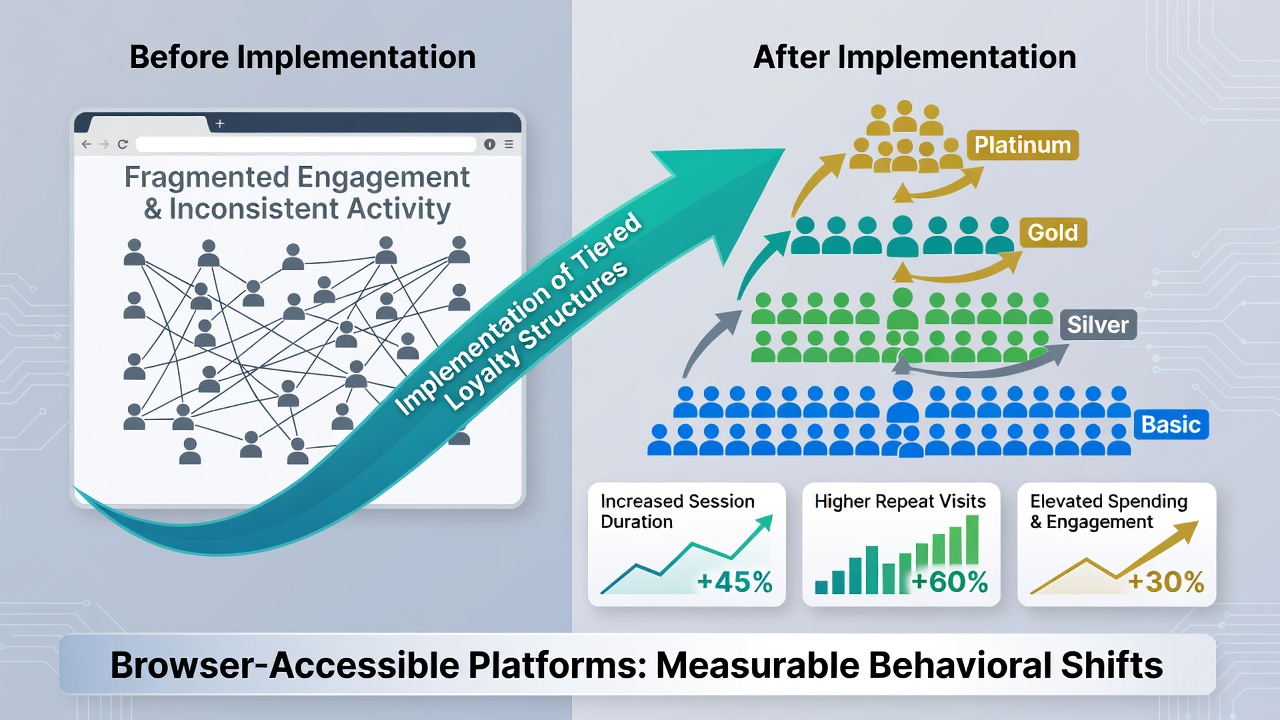
Studies tracking user activity before and after tier implementation reveal increases in average session duration. Research conducted by the University of Nevada Reno's gaming analytics group found that participants in tiered programs extended their time on site by an average of 22 percent during the first six months post-launch, particularly among those who reached intermediate levels. Login frequency also rose, with daily returns becoming more common as users monitored progress toward the next tier threshold. Spending patterns shifted as well, with data indicating a redistribution of funds toward games that award higher point multipliers rather than uniform play across all titles.
Retention and Progression Dynamics
Retention rates demonstrate clear correlations with tier status. Platforms report that users who achieve premium tier status maintain accounts active for periods 35 to 40 percent longer than those remaining at entry level, according to aggregated figures released by the Canadian Gaming Association in early 2025. Progression speed influences this outcome because slower advancement often leads to reduced activity once initial novelty fades. Those who studied these systems note that email and in-site notifications about tier milestones serve as effective prompts, driving return visits even during periods of lower natural engagement.
One notable pattern involves selective game preference adjustments. Users frequently concentrate wagers on specific categories that accelerate point accumulation, such as progressive jackpot titles or high-volatility options that align with bonus structures. This behavior appears across multiple jurisdictions and becomes more pronounced once users enter intermediate tiers where point values increase.
Regional Data Variations and June 2026 Developments
Geographic differences surface in how these programs affect behavior. Australian markets tracked by the Victorian Commission for Gambling and Liquor Regulation showed stronger emphasis on deposit frequency after tier introduction, whereas European platforms reported greater focus on game variety exploration. In June 2026, the European Gaming and Betting Association plans to release updated cross-border comparison data covering loyalty program impacts across five member states, providing further insight into these regional distinctions. Such reports help clarify whether tier benefits translate uniformly or require localization.
Transaction and Interaction Adjustments
Payment behaviors also evolve under tiered systems. Higher-tier users tend to utilize stored payment methods more consistently and opt for larger single transactions to meet qualification criteria quickly. Withdrawal patterns change too, with premium members requesting payouts less frequently due to reinvestment incentives tied to tier maintenance. Browser site operators document these shifts through internal dashboards that compare pre- and post-implementation transaction logs, revealing reduced churn among mid-tier participants.
Longer-Term Behavioral Trends
Over extended periods, tiered loyalty structures correlate with stabilized user bases rather than explosive short-term growth. Longitudinal tracking by academic teams at institutions such as the University of Sydney indicates that after 18 months, activity levels plateau at elevated baselines for those who maintain consistent tier status. Entry-level users exhibit higher dropout rates during the initial three months, suggesting the system creates a natural filter that retains committed participants while others disengage. These trends hold across desktop browser environments where session tracking remains precise.
Conclusion
Tiered loyalty structures in browser accessible gaming sites produce documented shifts in login patterns, spending allocation, game selection, and retention duration based on multiple regulatory and academic sources. Implementation details influence the speed and scale of these changes, while regional factors introduce variations in how users respond. Continued monitoring through scheduled industry reports, including the June 2026 release from the European Gaming and Betting Association, will supply additional data on whether these behavioral adjustments persist or evolve further as programs mature.