How Currency Fluctuation Patterns Reshape Access Thresholds for Tiered Loyalty Structures in Browser-Accessible Gaming Networks
Klara Hoffmann · Aug 4, 2026
How Currency Fluctuation Patterns Reshape Access Thresholds for Tiered Loyalty Structures in Browser-Accessible Gaming Networks
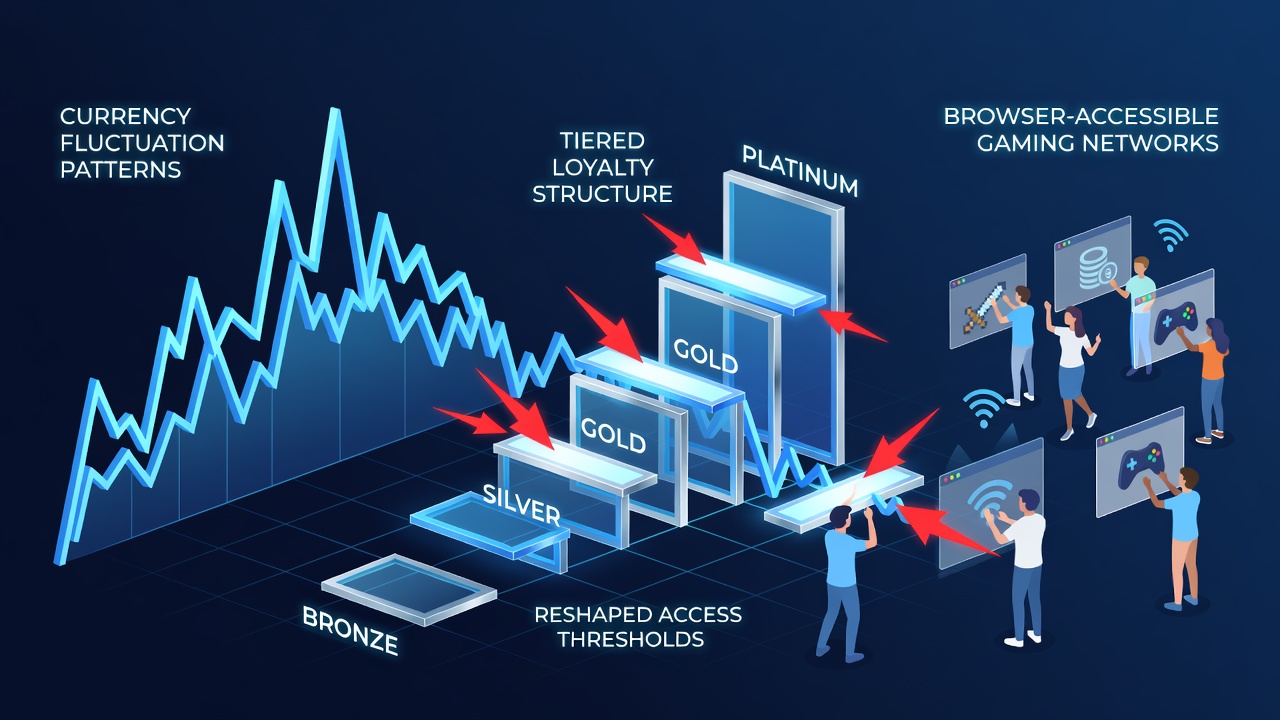
Browser-accessible gaming networks operate loyalty programs where players climb tiers through accumulated activity measured in points or deposits, yet currency fluctuation patterns directly alter the real-world value required to reach those thresholds. Exchange rate shifts between major currencies like the euro, US dollar, and emerging market units change how much a player must spend in their local currency to hit fixed point targets set by operators.
Mechanics of Tiered Structures in Digital Gaming
Operators define tiers through deposit volumes, wager amounts, or point totals calculated in a base currency, often USD or EUR, while players access these platforms from regions with different monetary systems. When the Brazilian real weakens against the dollar, a player needs more local currency to match the same tier entry point that was reachable last month. Data from industry monitoring services shows these adjustments occur automatically through real-time conversion engines embedded in account management systems.
Research from the European Gaming and Betting Association indicates that tier thresholds remained stable in nominal terms during 2025, yet effective access costs varied by as much as 18 percent across currency pairs tracked monthly. Players in Australia and Canada experienced similar recalibrations when their dollars moved against the US benchmark used by many networks.
Patterns of Currency Movement and Their Direct Effects
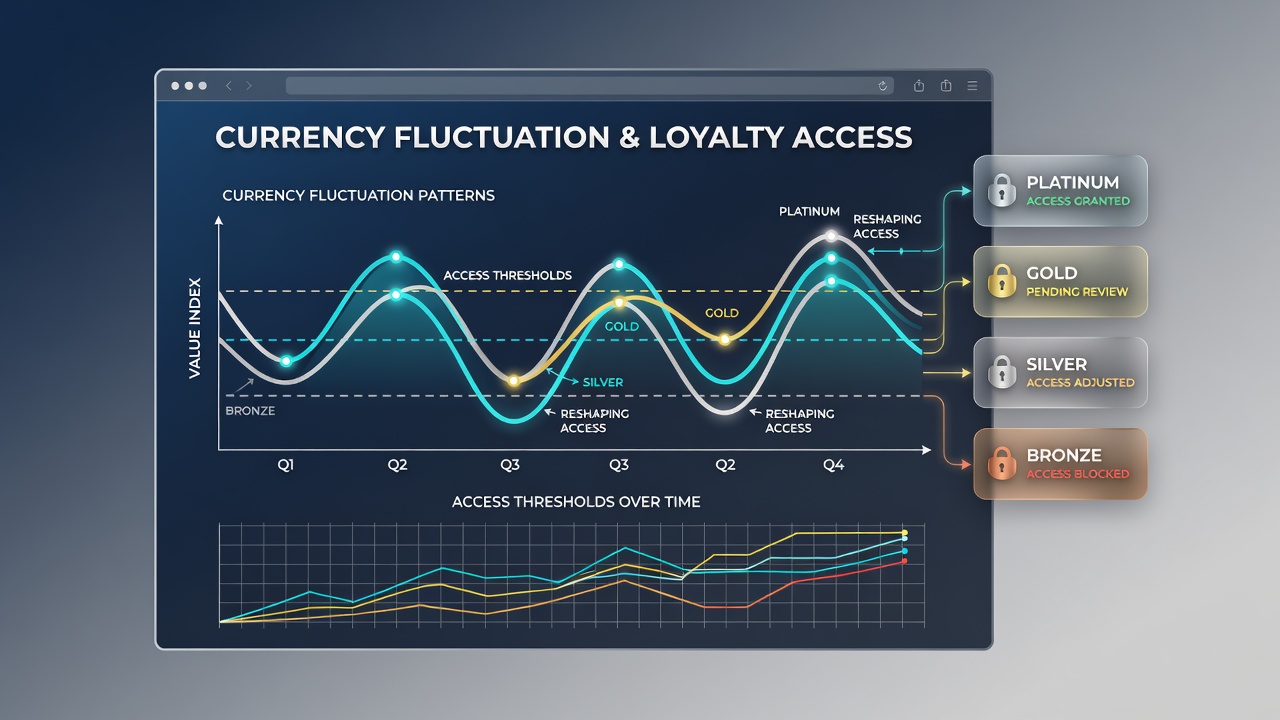
Short-term volatility spikes, such as those recorded in late 2025, prompted operators to recalibrate loyalty engines more frequently than in prior years. August 2026 brought additional swings after policy announcements in several Asian markets, and networks responded by updating conversion tables within 48 hours to maintain consistent tier economics. One platform adjusted its silver tier deposit requirement from 500 USD equivalent to 530 USD equivalent for players using the Indian rupee within a single week.
Longer-term trends reveal that sustained depreciation in emerging market currencies pushes entire player segments toward lower tiers unless operators intervene with localized multipliers. Figures released by the Asia Pacific Gambling Research Centre demonstrate that loyalty participation rates dropped 11 percent among certain Southeast Asian cohorts during periods of sustained local currency decline in 2025.
Browser Platform Specifics and Access Adjustments
Browser-based systems allow instant recalculation because they pull live forex data feeds directly into player dashboards without requiring app updates. This technical setup means threshold changes appear immediately when a user logs in from a new location or when rates move overnight. Observers note that some networks now display dual-currency progress bars, showing both the base requirement and the local equivalent updated every few minutes.
Those who manage cross-border accounts often discover that switching between browser sessions in different currencies can shift perceived progress toward the next tier. A Canadian player accessing the same account via a European VPN might see a different remaining balance needed after the platform applies the current exchange rate at login.
Regional Variations and Operator Responses
Operators in North America and Europe have introduced currency-hedged loyalty points for select markets, stabilizing thresholds for players whose local units experience high volatility. According to reports from the Canadian Gaming Association, several major networks adopted these hedges in early 2026 after tracking a 22 percent swing in the Canadian dollar against the US dollar over six months. In contrast, platforms focused on Latin American traffic continue to apply strict USD-equivalent calculations, resulting in more frequent tier demotions during depreciation periods.
What's interesting is how some networks now offer optional point purchases denominated in local currencies at fixed rates for limited windows, a direct response to player complaints about sudden threshold jumps. These options appear most often during periods when major pairs move beyond historical averages, as recorded by central bank data releases.
Conclusion
Currency fluctuation patterns continue to force ongoing recalibrations in browser-accessible gaming loyalty programs, with thresholds effectively rising or falling based on exchange movements rather than player behavior alone. Networks respond through technical updates, localized tools, and occasional hedging mechanisms that keep structures operational across borders. Data collected through 2026 confirms these dynamics affect participation rates and tier distribution in measurable ways across multiple regions.