Geofencing's Hidden Role in Shaping Game Availability for Cross-Border Casino Players
Eden Hayes · Aug 25, 2026
Geofencing's Hidden Role in Shaping Game Availability for Cross-Border Casino Players
Geofencing technology uses GPS, Wi-Fi, and IP address data to create virtual boundaries that determine which casino games players can access from specific locations, and operators rely on these systems to comply with licensing agreements that vary sharply from one jurisdiction to another. Cross-border travelers often encounter sudden changes in available titles the moment their devices cross into new regions, because platforms must enforce rules set by local regulators who prohibit certain games or bonus structures outside approved territories.
Mechanics Behind Location-Based Restrictions
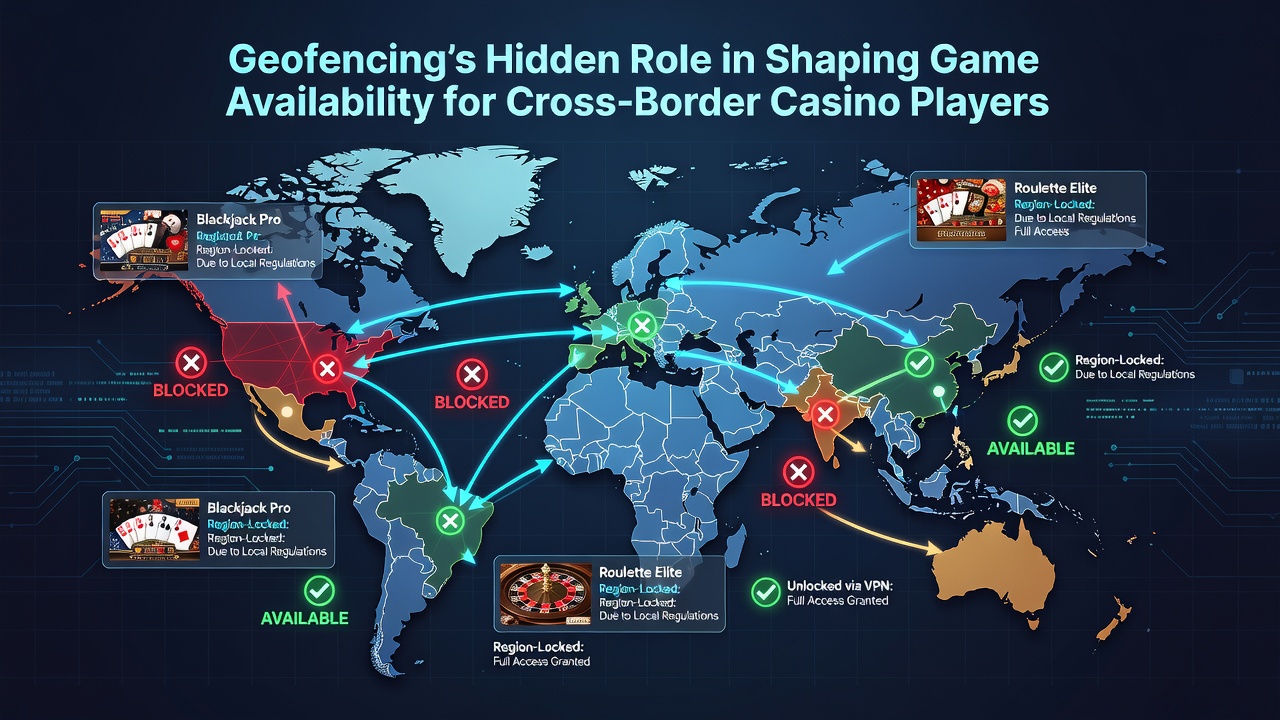
Operators integrate geofencing software directly into their platforms so that when a player logs in from abroad the system checks coordinates in real time and either unlocks or blocks entire game libraries accordingly. Developers program these checks to run continuously during sessions, which means a user starting a slot in one country might lose access to progressive jackpots if they move into another market mid-play. Data from regulatory filings shows that major platforms refresh their geofence maps monthly to reflect updates in licensing terms, and this ongoing maintenance keeps availability aligned with current laws.
Many providers also layer additional verification steps such as device fingerprinting onto the basic location check, creating a more robust filter that reduces the chance of players circumventing boundaries through VPNs or proxy servers. Those who've studied enforcement patterns note that repeated attempts to bypass these controls can trigger account reviews and temporary suspensions, because operators track anomalies to maintain compliance records required by oversight bodies.
Regulatory Drivers Across Regions
State and national authorities set the boundaries that geofencing must protect, and in the United States individual gaming control boards require platforms to restrict table games and certain slot titles when users cross state lines. Similar requirements exist in Canada where provincial commissions mandate that operators limit access to games approved only within their borders, while Australian regulators impose comparable rules for online offerings tied to local licensing. Observers note that these fragmented rules create a patchwork effect where the same title might appear in one jurisdiction yet remain unavailable just a few hundred kilometers away.
According to information published by the Alcohol and Gaming Commission of Ontario, operators must demonstrate that geofencing solutions accurately detect player locations within defined accuracy thresholds before receiving approval to offer real-money games. European authorities have adopted parallel standards that require platforms to update geofence parameters whenever new national rules take effect, and these updates directly influence which progressive networks remain visible to traveling players.
Player Experiences During International Travel
Business travelers and tourists frequently discover that favorite games disappear from their screens the moment they land in a new country, because the platform detects the change and adjusts the catalog instantly. One documented case involved players who accessed certain live dealer tables while in New Jersey yet found those options removed upon entering Pennsylvania, even though the same operator hosted both sites. Such shifts occur because licensing agreements often limit game distribution to specific geographic footprints, and geofencing serves as the enforcement mechanism that prevents accidental violations.
Players who maintain accounts across multiple platforms sometimes maintain separate profiles for different regions, yet most operators discourage this practice and require single-account verification that ties identity to primary residence. When August 2026 arrives, several jurisdictions plan to implement updated location accuracy standards that will further tighten detection tolerances, potentially increasing the frequency of mid-session game catalog adjustments for frequent travelers.
Technological Adaptations and Industry Responses
Software companies have responded by developing hybrid geofencing solutions that combine satellite data with cellular tower triangulation, which improves precision in urban environments where tall buildings can interfere with GPS signals. These upgrades allow platforms to maintain continuous service without abrupt interruptions when players move short distances within the same licensed area. Research conducted by academic groups in gaming technology has shown that such refinements reduce false positives by measurable percentages, although complete elimination of edge-case errors remains technically challenging.
Operators also communicate upcoming changes through in-app notifications, alerting users when they approach zone boundaries so they can finish active sessions before access shifts. This approach minimizes frustration while still satisfying regulatory demands for strict location compliance, and industry reports indicate that proactive messaging correlates with higher session completion rates among cross-border users.
Conclusion
Geofencing continues to function as an invisible gatekeeper that aligns game catalogs with the complex web of international and regional licensing agreements, and its influence on cross-border availability shows no sign of diminishing. As regulatory frameworks evolve and technology improves, platforms will keep refining these systems to balance legal obligations with user access, while players navigating multiple jurisdictions will continue to experience catalog changes tied directly to their physical locations.